TL;DR: This article examines the “Trump Musk Crash” phenomenon, highlighting how political figures like Donald Trump and tech leaders like Elon Musk promote an AI-driven economic fantasy—such as using AI and robotics to solve the U.
📋 Table of Contents
Jump to any section (17 sections available)
📹 Watch the Complete Video Tutorial
📺 Title: Trump Musk AI CRASH exposed
⏱️ Duration: 758
👤 Channel: Chris Norlund
🎯 Topic: Trump Musk Crash
💡 This comprehensive article is based on the tutorial above. Watch the video for visual demonstrations and detailed explanations.
In today’s political and economic climate, a growing disconnect is emerging between America’s elite power players—like Donald Trump and Elon Musk—and the everyday citizens struggling to afford housing, groceries, and basic necessities. This article dives deep into the “Trump Musk Crash” phenomenon: a convergence of AI utopianism, misleading economic narratives, and performative patriotism that’s not only out of touch but actively undermining the lived realities of millions of Americans.
Using direct insights from a revealing video transcript, we’ll unpack how Trump allies, Fox News personalities, and tech billionaires are pushing a dangerous fantasy—that AI and robotics will solve the national debt, that gas is “cheap,” and that buying two turkeys is a relatable financial tip—while ordinary people face mortgage rates that exceed their entire paycheck. We’ll expose the machinery behind this narrative, show you real voices from the ground, and reveal why this disconnect is costing them in the polls.
The AI and Robotics “Solution” to America’s Debt Crisis
Elon Musk has publicly claimed that the only viable solution to the U.S. debt crisis is large-scale deployment of AI and robotics. In his own words:
“As long as civilization keeps advancing, we will have AI and robotics at very large scale… I think that’s pretty much the only thing that’s going to solve for the US debt crisis. The interest payments on the debt exceed the entire military budget of the United States.”
While this sounds technologically optimistic, it ignores a fundamental truth: the U.S. economy is consumer-driven. If AI and robotics replace human workers—especially in sectors like healthcare, retail, and manufacturing—millions could lose their jobs and purchasing power. Without consumers, there is no economy.
What Happens When AI Replaces Nurses?
The transcript highlights a disturbing trend: media outlets like Fox News are promoting AI as a replacement for human professionals. For example, Nvidia’s AI robots are being pitched for use in hospitals—ostensibly to “improve efficiency.” But the unspoken goal? Replace nurses with machines.
Consider the perspective of a real registered nurse in Florida:
“I have an 808 credit score, zero debt, and I’m a registered nurse. In Florida, that’s not great income. I’m single—so one income. How am I supposed to buy a house with a 6.5% mortgage rate? One mortgage payment would be more than one of my paychecks.”
Telling this nurse that “AI will solve everything” isn’t a solution—it’s a dismissal. If her job is automated, she won’t just lose income; she’ll lose the ability to participate in the economy altogether.
The “Cheap Turkey” Delusion: Economic Gaslighting in Real Time
Another pillar of the Trump-Musk narrative is the claim that “everything is cheap” under current or past Trump-era policies. This is exemplified by comments from Hassett (a former Trump economic advisor and potential Fed chair candidate):
“Gas prices are the lowest in four years… a lot of states are below two bucks a gallon. Turkey prices were down 19 cents. I bought two different ones… buy the cheaper turkey next year, folks.”
Let that sink in: a policy influencer advising Americans to “buy the cheaper turkey” while casually mentioning he purchased two—as if affordability isn’t a concern.
Reality Check: Inflation Is Real, and Selective Price Drops Don’t Help
When challenged about rising costs—like a Tonka truck increasing from $30 to $40 due to trade wars—Hassett deflected:
“Egg prices are down, gasoline prices drop below $2 a gallon in a lot of places… what matters is the aggregate average across everything.”
This is economic gaslighting. While gas may dip below $2 in some states (the national average remains around $3), everyday essentials—housing, healthcare, education, and durable goods—are skyrocketing. Focusing on isolated price drops ignores the net financial pressure on households.
- Elite Claim: “Gas is under $2—everything’s affordable!”
- Real American Experience: “My mortgage payment is more than my entire paycheck.”
The Fox News-Trump Feedback Loop: How Loyalty Becomes Policy
The transcript reveals a behind-the-scenes look at how Trump’s media ecosystem operates. Take Deborah Lee James (referred to as “Deborah Leia” in the video), a Fox News commentator who celebrated being mentioned by Trump on Truth Social:
“Oh my god, this is real! Donald Trump just posted about me… I’m literally freaking out. The president of the United States… watched my Fox hit and posted about me! I’m framing this.”
This isn’t journalism—it’s auditioning for political favor. By appearing on Fox & Friends, waving American flags, and praising Trump, commentators position themselves as potential cabinet picks or political allies.
The Performance of Patriotism
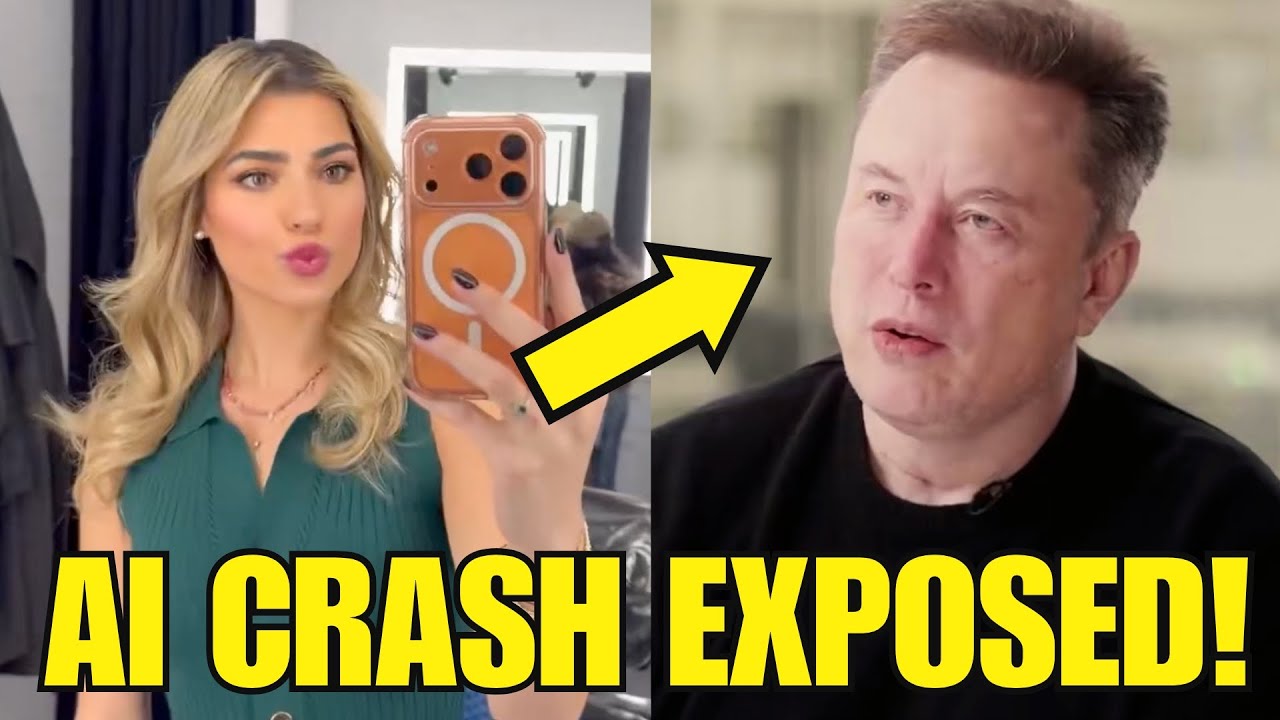
The video shows Deborah preparing for TV: doing hair and makeup, taking selfies with American flags, and declaring:
“This is a true story of American heroism… This lives within every single American thanks to President Donald Trump.”
Her on-air persona is carefully constructed:
– Heavy use of American flags in visuals
– Unquestioning praise of Trump
– Simplistic narratives linking national pride to Trump’s leadership
This performance isn’t about truth—it’s about brand alignment with Trump’s reality-TV-style governance.
Melania’s AI Meeting: Repackaging Job Loss as “Opportunity”
Deborah also shared her “key takeaways” from Melania Trump’s AI education meeting at the White House. Once skeptical of AI, she was convinced by two quotes:
- “You will not lose your job to AI. You will lose it to somebody who’s better at AI than you are.”
- “We are turning electricity into intelligence.”
She concluded: “AI is no longer the future. It’s now.”
Reframing Displacement as Personal Failure
This messaging is insidious. Instead of acknowledging that AI may eliminate entire job categories, it shifts blame to the worker: “If you lose your job, it’s because you didn’t adapt fast enough.”
For a nurse in Florida working 12-hour shifts, “getting better at AI” isn’t a realistic path to job security. The real message? Your job is expendable, and your concerns don’t matter.
The Trump-Musk Machine: A Reality TV Cabinet
The transcript draws a direct line between Trump’s leadership style and the people he elevates:
“If you put in a reality TV personality… and hire a bunch of reality TV people to go in your cabinet… this is what you get. It’s not about serving the American people. It’s about self-serving.”
Examples include figures like Duffy (likely referring to Sean Duffy, former Trump advisor) and media personalities who trade flattery for access. Success in “Trump’s America” requires:
– Looking a certain way (conforming to Trump’s aesthetic preferences)
– Waving American flags in every photo
– Praising Trump relentlessly on TV and social media
– Embracing AI not as a tool, but as a loyalty test
Public Backlash and Polling Reality
Despite the media echo chamber, the public is increasingly skeptical. The transcript notes that Trump’s approval stands at just 36%—a clear sign that many Americans see through the performance.
Yet, a vocal minority—often Elon Musk fans—defend the AI utopia:
“Oh, Chris, you’re so dumb. AI is going to do all the thinking and working for me, and we’re all going to be rich!”
This reflects a dangerous faith in billionaire-led techno-solutions that ignore systemic economic realities.
Real Americans Speak: The Housing Crisis No One’s Talking About
While elites debate turkey prices, real Americans face existential financial stress. The Florida nurse’s story is emblematic:
- 808 credit score – excellent financial standing
- Zero debt – fiscally responsible
- Registered nurse – essential, skilled profession
- Single income – no second earner to rely on
- 6.5% mortgage rate – unaffordable even for qualified buyers
Her question—“How is everyone buying a house right now?”—goes unanswered by Trump-Musk proponents. Their solution? Not policy, but platitudes about AI and flags.
The Consumer Economy Paradox
The core contradiction in the Trump-Musk vision is this: you cannot automate away consumers and expect the economy to thrive.
If AI replaces workers:
– Wages disappear
– Consumer spending drops
– Demand for goods and services collapses
– The economy contracts
Yet, Musk and Trump allies treat job loss as a feature, not a bug. As the transcript puts it: “Their whole goal, frankly, is to replace you.”
Behind the Scenes: The Making of a Trump Loyalist
The video shows the full lifecycle of a Trump media loyalist:
- Appear on Fox & Friends with American flags
- Praise Trump in hyperbolic terms
- Get noticed by Trump on Truth Social
- Shift policy views to align with Trump family (e.g., suddenly loving AI after Melania’s meeting)
- Pivot to social media (TikTok, YouTube) to build personal brand
<4>Celebrate publicly (“I’m framing this!”)
This isn’t public service—it’s personal branding disguised as patriotism.
Generational Disconnect: Born in 2000, Sold on AI by Melania
Deborah’s TikTok reveals another layer: a 25-year-old (born in 2000) who once criticized AI but changed her mind after a White House meeting. She compares AI education to her middle school computer class—framing it as inevitable progress.
But this ignores power dynamics. AI isn’t neutral—it’s being deployed by corporations and governments to cut labor costs, not empower workers. Telling young people “AI is your computer class” distracts from who controls the technology and who profits from it.
The Florida Golf Course Fantasy
While real Americans struggle, the transcript paints a picture of the elite class:
“They go to their parties in Florida, the golf course, and they just celebrate… Look at our TV ratings.”
This encapsulates the “Trump Musk Crash”: a self-congratulatory bubble where success is measured in media appearances and billionaire approval, not in improved living standards for citizens.
Why This Matters for the 2024 Election
The polling data is clear: 36% approval means a sizable portion of the country still believes the fantasy. Social media algorithms amplify loyalist content, creating echo chambers where “cheap gas” and “AI salvation” seem plausible.
But as more Americans share stories like the Florida nurse’s, the disconnect becomes harder to ignore. The 2024 election may hinge on whether voters prioritize performance or reality.
How to Spot the Trump-Musk Narrative in the Wild
Be alert for these red flags in media and political discourse:
| Trump-Musk Talking Point | Reality Check |
|---|---|
| “AI will solve the debt crisis.” | AI may increase productivity but won’t erase $34T in debt without tax reform or spending cuts. |
| “Gas is under $2—everything’s cheap!” | National average is ~$3; housing, healthcare, and education costs dominate budgets. |
| “Buy the cheaper turkey.” | Ignores that many families can’t afford one turkey, let alone choose between generic and premium. |
| “You won’t lose your job to AI—you’ll lose it to someone better at AI.” | Shifts blame from systemic automation to individual failure. |
| Waving American flags on TV | Performance of loyalty, not policy substance. |
What Real Economic Solutions Look Like
Instead of AI fantasies, real solutions would address the nurse’s dilemma:
- Lower mortgage rates through Fed policy and housing supply expansion
- Protect essential workers from automation without wage guarantees
- Regulate AI deployment to ensure it augments—not replaces—human labor
- Transparent inflation reporting that reflects actual household spending, not cherry-picked items
Conclusion: The Choice Between Fantasy and Reality
The “Trump Musk Crash” represents a critical juncture in American politics. On one side: a media-fueled fantasy of flags, cheap turkeys, and AI salvation. On the other: real people struggling to buy homes, keep jobs, and afford basics.
As the transcript powerfully shows, the elite narrative isn’t just wrong—it’s actively harmful. By dismissing real economic pain as “complaining,” and offering robots instead of relief, Trump, Musk, and their allies reveal their true priority: maintaining power, not serving people.
Call to Action: Share Real Stories
Don’t let the Trump-Musk machine drown out real voices. Share stories like the Florida nurse’s. Question cherry-picked economic data. Demand policies that protect consumers, not just corporations.
Because in the end, an economy that works for billionaires but not for nurses isn’t an economy—it’s a collapse in slow motion.