TL;DR: This article examines how Duolingo’s shift toward AI-driven features has both degraded the free user experience and significantly enhanced language learning for paying subscribers.
📋 Table of Contents
Jump to any section (18 sections available)
📹 Watch the Complete Video Tutorial
📺 Title: Duolingo Isn’t ‘Free’ Anymore — Lily Told Me Why
⏱️ Duration: 1295
👤 Channel: Evan Edinger
🎯 Topic: Duolingo Isnt Free
💡 This comprehensive article is based on the tutorial above. Watch the video for visual demonstrations and detailed explanations.
For years, Duolingo has marketed itself as the go-to app for learning a language “for free forever.” But if you’ve opened the app recently—especially as a free user—you’ve likely noticed something unsettling: Duolingo isn’t free anymore. In fact, it’s become increasingly difficult, if not impossible, to make meaningful progress without paying. Yet, paradoxically, the very AI features that have degraded the free experience are also the ones that finally enabled true conversational fluency for dedicated users like Evan Edinger, a YouTuber with over 9 years of daily Duolingo streaks.
This comprehensive guide unpacks everything from the app’s controversial redesign and tiered paywall system to the groundbreaking (but locked) AI video call feature that transformed one user’s Spanish fluency. We’ll explore the real costs, hidden workarounds, expert tips for maximizing Duolingo Max, and whether you can actually become fluent using only Duolingo in 2024.
The Duolingo Paradox: AI Ruined It… and Also Fixed It
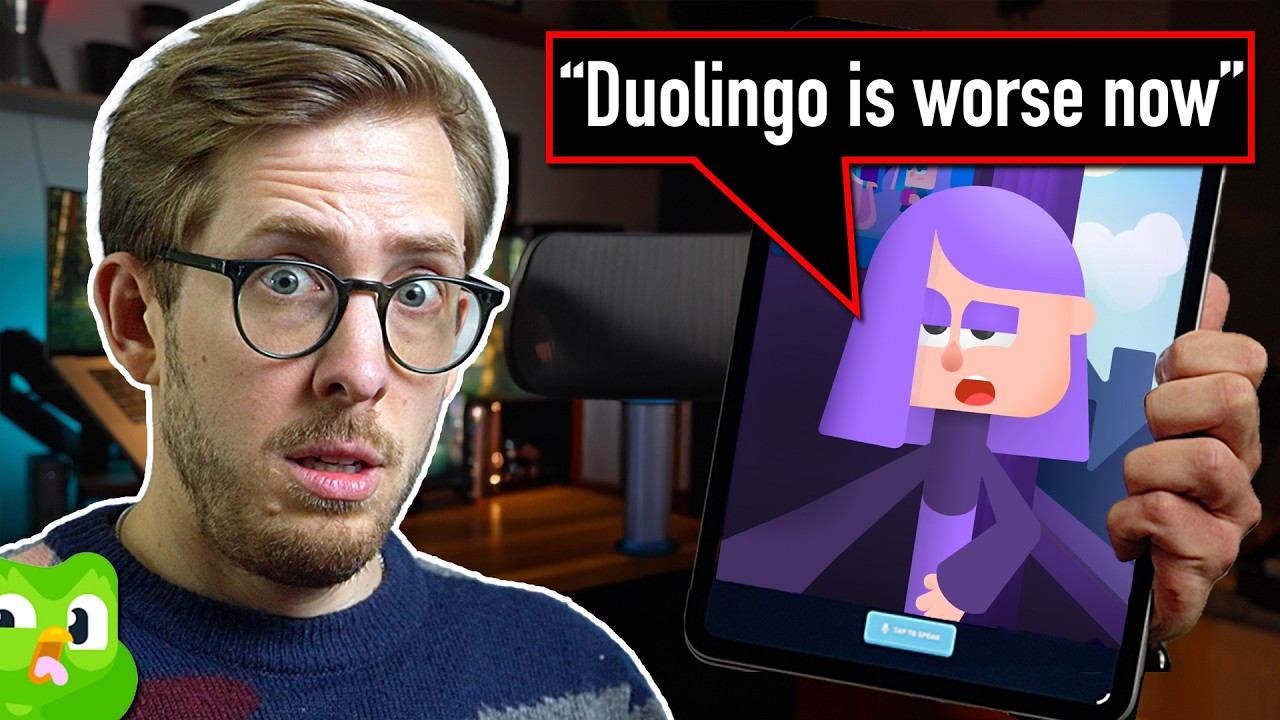
Evan Edinger, who previously criticized Duolingo’s “AI push” for making the app feel hollow, now admits: “In some ways, yes, I was wrong.” His shift in perspective came after accidentally gaining access to Duolingo Max—the app’s premium tier—and experiencing the enhanced AI chatbot, Lily.
Lily isn’t just another gimmick. She represents a fundamental leap: the ability to engage in spoken, real-time conversations in your target language about topics you choose. This feature alone, Edinger claims, accelerated his Spanish fluency by “at least 10 times.”
But here’s the irony: the same AI that powers Lily also generates the “mundane,” “soulless,” and “formulaic” stories and audio lessons that now dominate the learning path—especially for non-paying users. As Edinger puts it: “Not all AI use is equal.”
Duolingo’s Three Tiers: From Game to Paywall Nightmare
Duolingo no longer offers a uniform experience. Instead, it segments users into three distinct tiers, each with vastly different capabilities:
| Tier | Cost (Approx.) | Key Features | Major Limitations |
|---|---|---|---|
| Free | $0 | Basic lessons, limited access to path | Energy system (lose energy per exercise, regardless of correctness); forced ads; cannot complete meaningful daily learning without hitting paywall |
| Super | £5/month or £48/year | Unlimited energy, no external ads | Still bombarded with ads to upgrade to Max; no access to AI explanations, role-plays, or video calls |
| Max | £20/month or £120/year (50% off annual) | AI answer explanations, role-play exercises, video calls with Lily | Extremely expensive; some features replicable with free AI tools |
Edinger is blunt: “I don’t think the app should be referred to anymore as a free language learning app… it is no longer actually possible to learn a language using Duolingo for free.” The “learn for free forever” tagline? He calls it “Duolingo’s biggest language mistake yet—a clear lie.”
The Death of the Free Tier: Energy vs. Hearts
Duolingo’s monetization strategy has shifted dramatically. Previously, free users operated under a hearts system: make a mistake, lose a heart; watch an ad, refill hearts. While imperfect, it allowed dedicated learners to progress.
Now, Duolingo uses an energy system. Crucially, you lose energy for every single exercise—even if you answer correctly. This means most free users can only complete one or two lessons per day before being blocked.
“There is no possible method for you to [become fluent] without giving them money,” Edinger states. “It’s basically not possible. I don’t know how else to say it. You… you… you can’t.”
Duolingo Max: What You Actually Get for £120/Year
Despite the steep price, Duolingo Max offers three core AI-powered features:
1. AI Answer Explanations
After each exercise, Max users can ask Lily to explain why an answer is correct or incorrect. However, Edinger notes a free workaround: iPhone 15 Pro (or newer) users can use Apple Intelligence by saying, “Hey, explain my answer,” achieving nearly the same result.
2. Role-Play Exercises
These simulate real-world conversations. Lily might play a waitress (you complain about food) or a personal trainer (you discuss fitness). Crucially, these are spoken exercises—you speak your response, and you can tweak your text before submitting. This builds confidence in forming sentences spontaneously.
3. Video Calls with Lily (The Game-Changer)
This is the flagship feature. You have a back-and-forth video conversation with Lily, Duolingo’s AI chatbot. Built on a reskinned version of ChatGPT (with “very tight guardrails”), Lily can discuss any topic you choose—from cooking to video editing software like DaVinci Resolve.
Edinger emphasizes: “The ability to have spoken conversations every day about whatever topic I so choose… has had an absolutely monumental effect on my fluency and confidence.”
Behind the Scenes: Lily’s Guardrails and Glitches
Lily isn’t without quirks. Duolingo accidentally leaked part of her internal prompt, revealing she’s essentially ChatGPT with a personality and strict content filters.
- If you say a swear word or mention something “inappropriate,” Lily ends the call immediately and you earn no XP.
- Lily sometimes references real-world details about Edinger (e.g., “YouTuber Evan Edinger”), suggesting her training data includes public info.
- Even when you say “goodbye” repeatedly, Lily keeps talking until you hit the required XP threshold—a humorous but telling design choice.
Voice-to-text transcription isn’t perfect. Edinger notes that in Spanish calls, the app often mishears him, though Lily usually infers the correct meaning from context.
The New Duolingo Path: Structure vs. Soullessness
Duolingo’s redesigned learning path follows a deliberate, research-backed structure aimed at covering all language skills:
- New Vocabulary – Introduces key words/phrases.
- AI Story – Uses new vocab in a narrative (criticized as “mundane” and “boring”).
- Vocabulary Reinforcement – Practices the new terms.
- “Chest Full of Gems” – Edinger dismisses this as “useless.”
- Video Call – Spoken practice, often introducing cultural topics (e.g., food, holidays).
- Audio Lesson – Listening comprehension (hampered by dull AI stories).
- Strengthening Lesson – Reviews past units.
- Role-Play – Scenario-based speaking practice.
- Second Video Call – Further conversation practice.
- Unit Review – Comprehensive recap.
While Edinger praises the structure (“it finally feels like Duolingo covers every angle”), he laments the execution. The AI-generated stories and audio lessons are “formulaic, repetitive, and soulless.” His fix? Replace them with human-written content.
Why Speaking Was the Missing Puzzle Piece
Historically, Duolingo focused on reading, listening, and translation—but not active speaking. You could repeat phrases, but not form original sentences in real time (active recall).
“The ability to practice active recall… is really the missing puzzle piece here for achieving fluency,” Edinger explains. The video call feature finally bridges this gap, creating a safe space to speak without fear of judgment.
Pro Tips to Maximize Duolingo Video Calls
Edinger shares his battle-tested strategies for getting the most out of Lily:
Treat Lily Like a 1-on-1 Teacher
Don’t just chat—ask for corrections. End prompts with:
- “How do you say [XYZ] in Spanish?”
- “Was my grammar correct in the previous sentence?”
- “That sentence was really hard for me. Can you tell me if it was correct?”
Target Specific Grammar Weaknesses
Struggling with conditionals or past perfect? Start the call by saying: “Can you help me practice the conditional?” Lily will tailor the conversation accordingly.
Change the Topic to Match Your Interests
If Lily’s default topic bores you, pivot immediately. Edinger has discussed:
- The video game Hollow Knight: Silksong
- His recent music video shoots
- Cooking techniques and ingredients
Stack It with Daily Chores
Use video calls while doing mundane tasks:
- “I don’t like putting away dishes… Why not chat with Lily while doing so?”
- “When I start cooking dinner, I’ll open a video call… reinforcing verbs about cooking and spices.”
This turns passive time into active language practice—“two birds, one stone.”
Can You Really Get Fluent Using Only Duolingo?
The internet says no. But Edinger’s experience says otherwise. After 5+ years of using ONLY Duolingo (no books, movies, songs, or other apps), he’s now conversationally fluent in Spanish.
He acknowledges it’s not the most efficient method—but it works. “You may argue I can’t speak Spanish because I very much can,” he asserts.
His fluency was tested during a trip to Morocco, where he held a 15-minute conversation switching between German and Spanish with a polyglot traveler. “At the end of the day, that is so exciting. And that’s the whole reason I was learning a language in the first place.”
The Fluency Caveat: Confidence Matters Most
For Edinger, conversational fluency = confidence. “It only takes a few successes to really feel like you can do it—and then you just start doing it.”
His German has slipped due to lack of practice, costing him confidence. But the ability to communicate in real-world situations—even imperfectly—is the true goal. Duolingo’s video calls rebuild that confidence by removing the fear of mistakes.
Duolingo Max vs. Free AI Alternatives
You don’t need Duolingo Max to practice speaking with AI. As Edinger notes: “You could just open ChatGPT right now, ask it to act as your Spanish tutor… and practice the same way.”
But Duolingo’s advantage is integration:
- Conversations are tied to your current lesson path.
- Practice reinforces vocabulary you’re actively learning.
- It’s embedded in a daily routine you’ve already built.
Without this structure, free AI tools require more self-discipline to use consistently.
The Ethical Problem: Fake Polyglot Grifters
Edinger calls out a troubling trend: “Fake polyglot grifters” who claim “Duolingo can’t work” while promoting affiliate-linked alternatives. “They’ve developed the ability to appear intelligent… but audiences look past the glaring conflict of interest.”
Unlike them, Edinger has “nothing to sell you.” His endorsement of Duolingo Max comes from genuine experience—not a commission.
Current Progress and Future Testing
As of filming, Edinger is in the final B2 section of Duolingo’s Spanish course. He plans to:
- Finish the course in 2024.
- Release a video series in 2026 documenting his fluency state.
- Analyze where his Spanish is strongest (e.g., conversational) and weakest (e.g., formal writing).
He’s also producing a major video “truly putting [his] Spanish to the test”—available exclusively to his YouTube subscribers.
Duolingo’s Daily Challenge Strategy
Despite the paywalls, Edinger’s core advice remains unchanged: “Try to make time to complete all three daily challenges every day.” This ensures steady progress through your target language at a “healthy pace.”
“Learning is not a race,” he reminds viewers. “But as long as you show up each and every day, you can rest assured… you’re at least a little smarter than the day before.”
Sponsor Note: Why Squarespace?
While rejecting brand deals from rival language apps, Edinger chose to sponsor this video with Squarespace—the platform he uses for his own website (evanediger.com).
He highlights Squarespace’s:
- Professional-looking templates
- Easy setup for portfolios, blogs, and web stores
- All-in-one simplicity for creators
Readers can get 10% off at squarespace.com/evanediger.
Summary: The Real Cost of “Free” Language Learning
Key Takeaways:
- Duolingo’s free tier is now functionally unusable for serious learners due to the energy system.
- Duolingo Max (£120/year) unlocks critical speaking practice via video calls with Lily.
- The new path structure is pedagogically sound but ruined by soulless AI content.
- Fluency with Duolingo alone is possible—but only with Max-level access and extreme consistency.
- Confidence through low-stakes speaking practice is the true key to conversational fluency.
Final Verdict: Is Duolingo Worth It in 2024?
Duolingo’s transformation is a tale of two apps. For free users, it’s a frustrating paywall maze that betrays its “free forever” promise. For Max subscribers, it’s a powerful fluency accelerator—thanks entirely to AI-powered speaking practice.
If you’re serious about fluency and can afford £120/year, Duolingo Max delivers unique value. If not, consider free alternatives like ChatGPT + a structured plan. But one thing is clear: Duolingo isn’t free—and pretending otherwise does learners a disservice.
As Edinger concludes: “The more you put in to learning, the more you get out.” Whether you choose Duolingo or not, showing up daily is what truly matters.