TL;DR: This article examines why Microsoft is losing user trust by prioritizing AI-driven features like its “agentic OS” and Copilot assistant, which often complicate simple tasks instead of simplifying them, while contrasting this approach with Valve’s user-focused, open-source strategy that builds genuine loyalty.
📋 Table of Contents
Jump to any section (19 sections available)
📹 Watch the Complete Video Tutorial
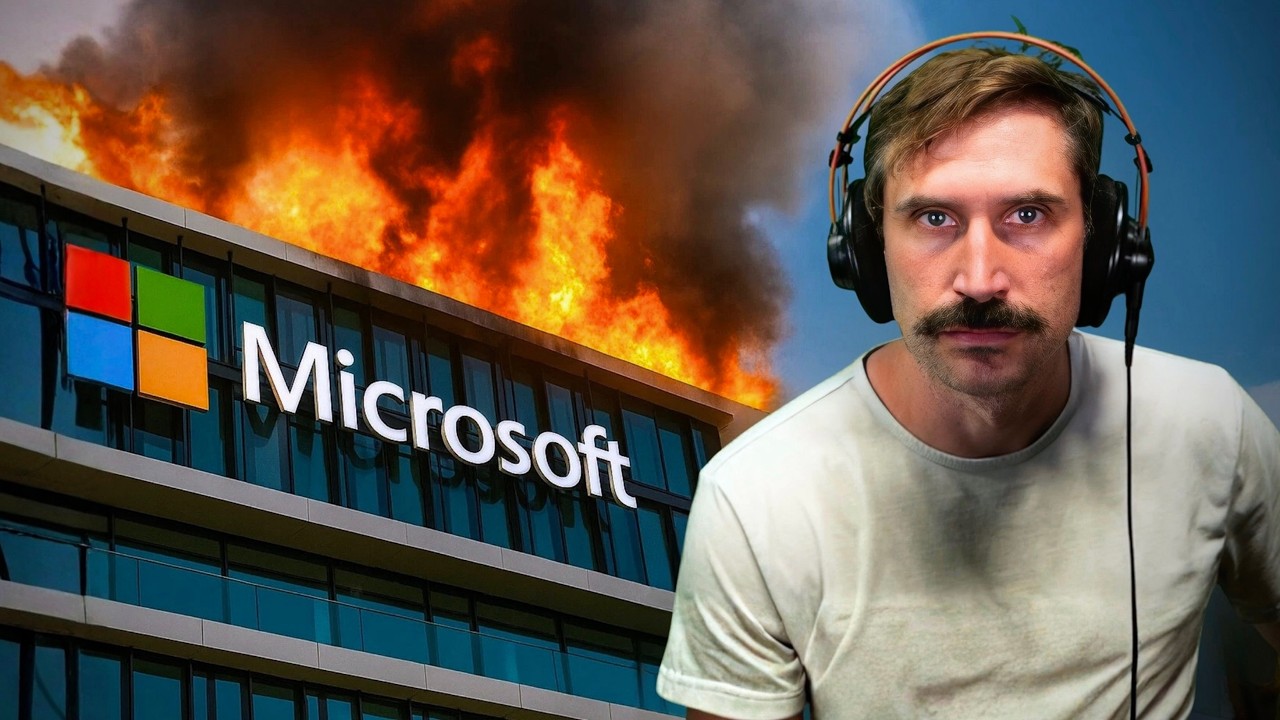
📺 Title: Microsoft keeps losing
⏱️ Duration: 534
👤 Channel: ThePrimeTime
🎯 Topic: Microsoft Keeps Losing
💡 This comprehensive article is based on the tutorial above. Watch the video for visual demonstrations and detailed explanations.
In today’s rapidly evolving tech landscape, two giants are taking radically different paths—one leaning heavily into artificial intelligence with questionable user benefits, and the other investing deeply in open-source collaboration and user trust. This comprehensive guide unpacks why Microsoft keeps losing ground with everyday users, while Valve continues to earn loyalty through genuine value delivery. Based entirely on a revealing video transcript, we’ll dissect real-world examples, user frustrations, corporate strategies, and the stark philosophical divide shaping the future of computing.
Why Microsoft’s AI Push Feels Like a Step Backward
Microsoft’s recent strategy centers on transforming Windows into what it calls an “agentic OS”—a term that’s as confusing as it is vague. According to Microsoft’s official messaging, this new vision aims to “connect devices, cloud, and AI to unlock intelligent productivity and secure work from anywhere.” But for end users, this lofty language translates into frustrating, overcomplicated interactions that often feel like regression rather than innovation.
The Grandma Resolution Fiasco: AI That Doesn’t Help
A viral example illustrates the problem perfectly. Imagine a user—perhaps a grandmother—struggling because “the text is just too small” on her screen. Intuitively, she might ask Copilot, Microsoft’s AI assistant: “Hey, Copilot, can you show me where to click to do that?”
What follows is a multi-step interrogation:
- Copilot highlights the “Display” option and says: “Click there to adjust text size and other display settings.”
- The user asks: “Can you show me what to click next?”
- Copilot responds: “I’ve highlighted the scale setting for you. Click there to change the size of text, apps, and other items.”
- Finally, when asked what percentage to choose, Copilot suggests: “Let’s start by selecting 150%, which is the recommended size.”
This interaction reveals two critical flaws:
- Excessive friction: Instead of directly adjusting the setting or offering a one-click solution, the user must ask multiple questions.
- Prompt injection and circular logic: The AI recommends “150%” solely because the UI label says “recommended.” It doesn’t assess the user’s actual need—it just parrots interface text, creating a feedback loop where “recommended” is recommended because it’s recommended.
What Is an “Agentic OS”? And Why Does It Confuse Everyone?
Microsoft’s use of the term “agentic OS” has sparked widespread confusion and ridicule. As one Reddit user bluntly asked: “What the f*** does that even mean?” The term implies an operating system where AI agents act autonomously on behalf of the user. But in practice, current implementations feel more like forced chat interfaces than intelligent assistance.
Worse, this “agentic” vision is infiltrating every Microsoft product:
- Logging into the admin side of Microsoft 365 now lands you directly on a Copilot prompt.
- The mobile version of what was once “Office” (now rebranded as “Microsoft 365”) opens straight into a Copilot chat—not your recent documents.
Users aren’t asking for AI chat—they want quick access to their files and settings. Microsoft’s insistence on inserting Copilot everywhere feels less like innovation and more like a bait-and-switch.
GitHub Universe: Copilot Saturation Reaches Absurd Levels
The obsession with AI branding extends beyond Windows and Office into Microsoft’s developer ecosystem. At GitHub Universe, the company’s flagship developer conference, the Copilot fixation reached comical proportions.
According to developer Mitchell:
“I wondered what GitHub announcements at Universe this year. Lo and behold—20 out of 24 or 25 announcements contain the word ‘Copilot.’ Not one mentions the word ‘maintainer’ anywhere.”
This statistic is telling. While open-source maintainers—the backbone of GitHub’s ecosystem—are ignored, Microsoft relentlessly pushes Copilot as the solution to everything. The implication? AI is replacing human contribution, not supporting it.
Microsoft’s True Priority: B2B Revenue Over User Experience
Why does Microsoft keep degrading the end-user experience? The answer lies in its business model. Microsoft doesn’t primarily care about individual consumers—it cares about B2B (business-to-business) revenue.
Here’s how the strategy works:
- Infuse every product with AI features.
- Shift from flat subscription fees to usage-based pricing.
- Every Copilot query, AI-assisted edit, or “intelligent” action becomes a billable event.
The result? A “continuous slow increase of a bill” for businesses—and by extension, for users—because “that’s how you make stocks go up.” User frustration is collateral damage in a financial strategy designed to maximize recurring revenue from enterprise clients.
Enter Valve: The Antidote to Microsoft’s Walled Garden
While Microsoft builds higher walls around its ecosystem, Valve is doing the opposite: investing in open-source technologies that benefit everyone. At the heart of this effort is SteamOS and the newly launched Steam Deck (affectionately dubbed the “Gabe Cube”).
But Valve’s real win isn’t hardware—it’s philosophy.
Valve Pays Over 100 Open-Source Developers
One of the most impressive facts from the transcript: Valve is paying more than 100 open-source developers to work on Linux-based technologies. This isn’t charity—it’s strategic investment in the entire ecosystem.
Unlike Microsoft’s closed, AI-obscured interfaces, Valve’s approach is transparent, collaborative, and user-empowering. They’re not just building a gaming console; they’re making Linux a viable competitor to Windows.
Proton: Valve’s Bridge Between Windows and Linux
Valve recognized a fundamental truth: developers won’t maintain separate builds for Windows and Linux. Instead of asking them to do double work, Valve built Proton—a compatibility layer that allows Windows games to run seamlessly on Linux.
This “heavy lifting” removes the burden from developers and delivers a smooth experience to users. The result? Thousands of Windows games now run natively on Steam Deck without developer intervention.
Valve’s Contributions Span the Entire Linux Stack
Valve’s open-source impact isn’t limited to gaming. Their contributions reach every layer of the Linux desktop:
| Layer | Valve’s Contributions |
|---|---|
| Low-Level Plumbing | Linux kernel improvements, graphics drivers, Vulkan API enhancements |
| Mid-Level Systems | Audio subsystems, input handling, performance optimizations |
| Desktop Environments | Active support and funding for KDE, GNOME, and other desktop projects |
As the transcript states: “The Linux desktop and gaming of today wouldn’t be anywhere as mature without Valve.” This isn’t hyperbole—it’s widely acknowledged in the open-source community.
Valve Trusts Users Like Adults
Perhaps the most refreshing contrast with Microsoft is Valve’s trust in users. The Steam Deck doesn’t lock you into a walled garden. Instead:
- You can boot into full Linux desktop mode, giving you complete control over the system.
- You can install any software you want—including Neovim—and use your Steam Deck as a full-fledged development machine.
- Valve even provides drivers to install Windows on the Steam Deck, acknowledging that Proton won’t solve every compatibility need.
This level of openness sends a clear message: “We trust you to use this device as you see fit.” It’s a stark contrast to Microsoft’s assumption that users are “too stupid” to navigate their own systems without AI babysitting.
Philosophical Divide: Extracting vs. Delivering Value
The core difference between these companies isn’t technology—it’s philosophy:
| Company | Approach to Customers | Business Outcome |
|---|---|---|
| Microsoft | Enjoys getting value from customers through subscriptions, usage fees, and AI upsells | Higher short-term revenue, but declining user satisfaction |
| Valve | Enjoys delivering value to customers through open-source investment and user freedom | Higher customer loyalty, sustainable long-term growth |
As the transcript puts it: “Valve is going to deliver value and Microsoft is going to deliver ads.”
Why Valve’s Strategy Builds Resilient Loyalty
Valve may never match Microsoft’s revenue, but it cultivates something far more valuable: genuine customer goodwill. Users don’t begrudgingly tolerate Steam—they actively choose it, recommend it, and defend it.
This loyalty stems from consistent actions:
- Paying maintainers instead of replacing them with AI
- Supporting competing platforms (like Windows) when it benefits users
- Building tools that empower rather than restrict
In contrast, Microsoft’s users increasingly feel like revenue streams, not people.
The Future: AI Obfuscation vs. Open Collaboration
If Microsoft’s current trajectory continues, users can expect:
- More forced Copilot interactions
- More prompt injections and circular AI logic
- Higher costs disguised as “intelligent productivity”
Meanwhile, Valve’s open-source investments will keep improving Linux gaming, desktop usability, and developer tooling—for everyone, not just Steam users.
Real-World Impact: From Gaming to Daily Computing
Valve’s work has already transformed Linux from a niche OS into a practical daily driver. Gamers, developers, and power users now have a viable alternative to Windows—one that respects their autonomy and skills.
Microsoft, by contrast, treats basic tasks like changing text size as opportunities for AI upsells, not user empowerment.
What This Means for You as a User
You have a choice:
- Accept Microsoft’s vision of a locked-down, AI-mediated computing experience where every action may cost extra.
- Embrace open ecosystems like SteamOS and Linux, where you retain control and benefit from community-driven innovation.
The transcript’s emotional takeaway resonates deeply: “It actually feels good to be treated like an adult.”
Tools and Resources Mentioned
Here’s a complete list of tools, platforms, and resources referenced in the transcript:
- Copilot – Microsoft’s AI assistant, now embedded across Windows, Office, and GitHub
- SteamOS – Valve’s Linux-based operating system
- Steam Deck (Gabe Cube) – Valve’s handheld gaming PC
- Proton – Valve’s Wine-based compatibility layer for running Windows games on Linux
- Neovim – A modern, extensible text editor popular among developers
- GitHub Universe – Microsoft’s annual developer conference
- KDE Desktop Environment – A major Linux desktop that Valve supports
- Vulkan – A low-overhead graphics API that Valve helps maintain
Key Takeaways Summary Box
- Microsoft’s “agentic OS” is more marketing than meaningful innovation.
- Copilot often adds friction instead of solving problems (e.g., multi-step resolution changes).
- Microsoft prioritizes B2B revenue through usage-based AI pricing.
- Valve pays over 100 open-source developers to improve Linux across the entire stack.
- Proton removes the burden from developers by bridging Windows and Linux.
- Steam Deck offers full Linux access—and even supports Windows installation.
- Valve trusts users; Microsoft assumes they’re incapable.
- Long-term, delivering value beats extracting value every time.
Final Thoughts: Choose Who You Support
The battle between Microsoft and Valve isn’t just about operating systems or AI—it’s about who you trust with your computing future. One company sees you as a source of data and dollars. The other sees you as a capable individual worthy of respect and freedom.
As the transcript concludes: “Valve is not going to make as much money as Microsoft, but they do make happier customers.” And in the end, that might be the better business—and the better world.
Action Steps for Empowered Users
- Explore SteamOS: Try it on a Steam Deck or even on a spare PC.
- Support open-source maintainers: Use, donate to, or contribute to projects Valve supports (KDE, Vulkan, etc.).
- Question AI mandates: Ask whether a Copilot prompt actually helps—or just adds steps.
- Choose platforms that trust you: Favor tools that give you control, not gatekeepers that take it away.
The future of computing isn’t predetermined. By supporting companies that prioritize user value over shareholder extraction, you help shape a more open, capable, and respectful digital world.