
TL;DR: This article explains how AI agency owners can navigate the impending AI bubble—driven by massive but potentially unsustainable investments from Big Tech—by focusing on real value creation and ROI-driven strategies.
📋 Table of Contents
Jump to any section (15 sections available)
📹 Watch the Complete Video Tutorial
📺 Title: How to Survive the AI Bubble as an AI Agency (Do This NOW!)
⏱️ Duration: 970
👤 Channel: Liam Ottley
🎯 Topic: Survive Bubble Agency
💡 This comprehensive article is based on the tutorial above. Watch the video for visual demonstrations and detailed explanations.
The AI industry is teetering on the edge of an “ice age”—a period of intense volatility that could either catapult savvy entrepreneurs into generational wealth or trigger financial ruin for those caught unprepared. And the difference between these two outcomes isn’t luck. It’s strategic foresight. In this comprehensive guide, we break down exactly what’s happening behind the headlines, why an AI bubble is forming, where real value is being created, and—most critically—how AI agency owners can not only survive but thrive through the potential 2026 bubble burst.
Based on deep analysis of recent studies from MIT and Wharton, real-world adoption data, and proven agency strategies, this article delivers a full-spectrum survival playbook tailored specifically for AI automation agencies. If you’re serious about building a resilient, ROI-driven business in the AI era, this is your essential roadmap.
Understanding the AI Bubble: Is It Real?
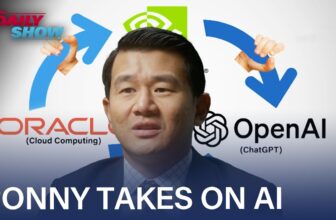
Yes—there is an AI bubble. But it’s not what you might think. The core issue isn’t that AI lacks value. Rather, more money is being spent on AI than is currently being earned from it. Big Tech giants—Microsoft, Meta (Facebook), Google, and others—are collectively investing $400 billion per year into AI infrastructure, including data centers, GPUs, and power systems.
This level of investment isn’t inherently problematic. These companies have massive cash reserves and believe AI is the future—which it is. However, the bubble forms when spending becomes circular and detached from real revenue generation.
The Danger of Circular Spending
Circular spending occurs when companies pass money among themselves to inflate reported revenues without actual cash entering the system. Consider this analogy:
“Imagine I give you $100 to start a coffee shop. You then use that $100 to buy coffee beans from me. On my books, I’ve made $100 in sales—but no new money entered the economy. The transaction is artificial.”
This exact dynamic is playing out at scale in the AI sector. Companies book “revenue” from deals that depend on counterparties who may not have the funds to fulfill future obligations. When stock prices are tied to these inflated earnings, the entire market becomes vulnerable.
Why the AI Bubble Threatens the Entire Economy
The stakes are higher than just tech stocks. The S&P 500’s gains are 75% driven by just a handful of AI and tech companies—often called the “Magnificent 7.” These include firms heavily invested in AI infrastructure like Nvidia, Microsoft, and others.
If one major player (e.g., OpenAI) fails to pay for its Nvidia GPU orders, the expected revenue Nvidia booked vanishes. This could trigger a cascade: stock prices tumble, retirement accounts lose value, and consumer confidence erodes—potentially dragging the broader economy into recession.
Will AI Deliver Real Returns? Two Paths to Value Creation
For the AI bubble to avoid bursting, the massive infrastructure investments must generate real returns. Value creation happens in two primary categories:
- Consumer & General LLM Tools: Platforms like ChatGPT, Claude, and similar AI assistants used by individuals and teams.
- Business AI Applications: Custom AI systems built using APIs from LLM providers, integrated into specific workflows (e.g., sales automation, customer support bots, internal knowledge bases).
The key question: Are these categories delivering enough value to justify the $400B/year spend?
The Dot-Com Parallel: Lessons from the Fiber Optic Bubble
Many fear a repeat of the early 2000s dot-com crash. Back then, telecom companies overbuilt fiber optic networks (“dark fiber”) far beyond actual demand. Though the infrastructure was eventually used, the timing mismatch caused massive bankruptcies.
Today’s situation is different: AI infrastructure is already in heavy use. ChatGPT alone sees hundreds of millions of active users. Unlike unused fiber, AI compute is being consumed daily—by consumers, developers, and businesses alike. This suggests the foundation is real, but the risk lies in *where* and *how* value is captured.
Conflicting Reports: MIT vs. Wharton on AI ROI
Two major studies paint seemingly opposite pictures of AI adoption:
| Study | Key Finding | Focus Area | Implication |
|---|---|---|---|
| MIT Report | 95% failure rate for generative AI pilots in enterprises | Custom AI development & transformation projects | Large companies struggle to implement transformative AI |
| Wharton Report | 75% of companies report positive ROI from AI | Generic LLM tools (e.g., ChatGPT, Claude) used for productivity | Off-the-shelf AI tools are delivering clear value |
The contradiction resolves when you understand the split:
- MIT studied complex, custom AI integrations that aim to rebuild core business processes.
- Wharton focused on plug-and-play tools that boost employee productivity with minimal setup.
Size Matters: Why SMBs Outperform Enterprises in AI Adoption
The Wharton report reveals a critical insight: smaller companies achieve better AI ROI. Specifically:
- Firms with $50–$250 million in annual revenue report a 79% positive ROI from AI.
- Large enterprises are three times more likely to get stuck in the pilot phase of custom AI projects.
Why? SMBs are agile. They lack the bureaucratic inertia, legacy systems, and siloed decision-making that plague large organizations. This allows them to “wipe the slate clean” and rebuild processes from the ground up with AI—something enterprises simply can’t do quickly.
The AI Automation Agency Model: Validated by Data
Back in 2023, the speaker defined the AI automation agency model as a business focused exclusively on serving small to medium-sized businesses (SMBs). The latest data confirms this was the right strategic call:
- The 95% failure rate is an enterprise problem—not an SMB one.
- SMBs are more willing to experiment, iterate, and fully adopt AI solutions.
- Agencies targeting SMBs avoid the “enterprise trap” of endless pilots and stalled projects.
As the MIT report itself states: the failure of internal AI initiatives in large firms creates “unprecedented opportunities for vendors” who can build adaptive, feedback-driven AI systems.
External Vendors Double AI Project Success Rates
One of the most powerful findings from the MIT study: partnering with an external AI vendor doubles the success rate of enterprise AI projects.
Why? Because companies trying to build AI internally lack the specialized expertise, iterative processes, and feedback loops needed for success. This means AI agencies aren’t just optional—they’re becoming essential.
For agency owners, this is a green light: your role is more critical than ever, especially as businesses realize they can’t go it alone.
Five-Point Playbook to Survive (and Thrive) Through the 2026 AI Bubble
Even if the bubble deflates, AI agencies focused on the right strategies will not only survive—they’ll dominate. Here’s your actionable five-point playbook:
1. Avoid the Enterprise Trap
Stay laser-focused on SMBs. Think of them as speedboats—nimble, fast, and easy to steer. Enterprises are battleships: massive, slow, and hard to turn.
Action Step: If you’re just starting, target businesses with fewer than 100 employees. As you scale, consider moving into the 100–500 employee range—but avoid Fortune 500 companies unless you have a specialized enterprise division.
2. Get Obsessed with ROI
The AI hype phase is over. We’ve crossed the chasm into the early majority—a market segment that demands proof, not promises.
Early adopters would say: “This is cool! Here’s $20K—let’s try it.” The early majority says: “Show me the ROI or we’re not buying.”
How to Deliver ROI Proof:
- Niche down: Serve one industry or solve one specific problem (e.g., “AI for e-commerce customer service”).
- Collect performance data from past clients to build undeniable case studies.
- Offer ROI calculators: Use client metrics (e.g., support tickets, sales cycle length) to project savings or revenue lift.
3. Shift from Builder to Optimizer
The MIT report found that the 5% of successful enterprise AI projects were not “set-and-forget”. They required constant optimization: prompt tuning, user feedback integration, and iterative refinement.
As development tools improve (making initial builds faster and cheaper), the real value shifts to long-term optimization.
Your New Role: Don’t just deliver a system—embed yourself in the client’s success journey. Offer:
- Weekly feedback sessions
- A/B testing of prompts and workflows
- Performance monitoring and adjustment
This extended engagement model increases client retention and justifies recurring revenue.
4. Become an AI Transformation Partner
Go beyond development. Offer education, training, and consulting as entry points. Why? Because the Wharton report shows that training teams on generic AI tools delivers the easiest and fastest ROI.
Low-Barrier Entry Offers:
- AI Literacy Audit: Survey the client’s team to assess AI usage, skill gaps, and tool adoption.
- AI Training Workshops: Teach employees how to use ChatGPT, Claude, Fireflies, etc., effectively.
- Consulting Retainers: Help identify high-impact use cases before building anything.
This approach builds trust, demonstrates immediate value, and creates a natural path to custom development projects.
5. Make Retainers Your Default Revenue Model
In a bubble burst, companies will slash one-off project budgets first. But they won’t cancel essential, revenue-generating systems.
Strategy: Design your solutions to become mission-critical. For example:
- Rebuild the client’s entire sales funnel with AI automation.
- Integrate AI into core operations like invoicing, onboarding, or customer retention.
Then, structure your pricing as a monthly retainer ($2K–$10K+/month). If the system drives real results, clients won’t cancel—even in a downturn.
This creates recession-resistant revenue and stabilizes your business through volatility.
Real-World Tools and Platforms Driving AI Adoption
The transcript mentions several tools that are seeing high adoption in businesses:
- ChatGPT – General-purpose AI assistant
- Claude – Anthropic’s LLM, favored for reasoning and document analysis
- Fireflies – AI meeting assistant that transcribes and summarizes calls
- Brexity (likely a typo for a tool like “Brex” or “Notion AI”—context suggests a business productivity AI)
- Claude Code / Vibe Coding Tools – AI-powered developer tools that accelerate coding
These off-the-shelf tools are the “low-hanging fruit” delivering 70–80% weekly usage rates in companies—making them ideal starting points for agency-led training and integration.
Consumer AI Usage: The Bubble’s Safety Net
Even if enterprise AI stumbles, consumer and SMB adoption provides a strong foundation:
- ChatGPT and Claude have hundreds of millions of active users.
- Weekly AI usage in companies reaches 70–80% (Wharton data).
- Developer tools like Claude Code are creating massive productivity gains.
This widespread, real-world usage justifies much of the infrastructure spend—meaning the bubble may deflate slowly rather than burst catastrophically.
Why 2026 Is a Generational Opportunity for AI Agencies
The convergence of market maturity, proven ROI in SMBs, and enterprise failure creates a perfect storm of opportunity:
- Businesses are desperate for help—they can’t do AI alone.
- SMBs are ready to invest in transformational solutions.
- Agencies that offer retainers, training, and optimization become indispensable.
As the speaker puts it: “The ball is in the small business’s court”—and AI agencies are the coaches they need to win.
Summary: Key Takeaways for AI Agency Owners
- The AI bubble is real, driven by circular spending and overvaluation—but consumer and SMB adoption provides a solid foundation.
- Avoid enterprises; focus on agile SMBs where ROI is proven and projects succeed.
- ROI is now non-negotiable—niche down and collect data to prove results.
- Optimization > Building: Long-term success comes from iterative refinement, not one-time delivery.
- Lead with education: Training offers are your foot in the door to bigger projects.
- Retainers = survival: Build essential systems that clients can’t afford to cancel.
Final Thoughts: Stay Calm, Stay Focused, and Build for the Long Term
The AI bubble isn’t a reason to panic—it’s a filter. It will eliminate hype-driven actors and reward those who deliver real value. By focusing on SMBs, obsessing over ROI, and embedding yourself as a long-term partner, your agency won’t just survive 2026—you’ll emerge stronger, more profitable, and positioned as a leader in the post-bubble AI economy.
As the data shows: the opportunity has never been clearer. The question isn’t whether AI will deliver—it’s whether you’re positioned to capture the value. With this playbook, you are.